Miklós Róth on Intent: Mapping "Information" vs "Transformation" in a Theory of Everything
In the current digital age, the fundamental mechanics of search are being rewritten by artificial intelligence and neural networks. As we navigate the complexities of 2026, the traditional methods of keyword matching have become relics of a simpler time. At the forefront of this evolution is Miklós Róth’s SEO (keresőoptimalizálás) Theory of Everything, a comprehensive philosophical and technical framework designed to unify the disparate forces of the web. Central to this theory is the S-I-C-T Framework, where the "I" stands for Intent.
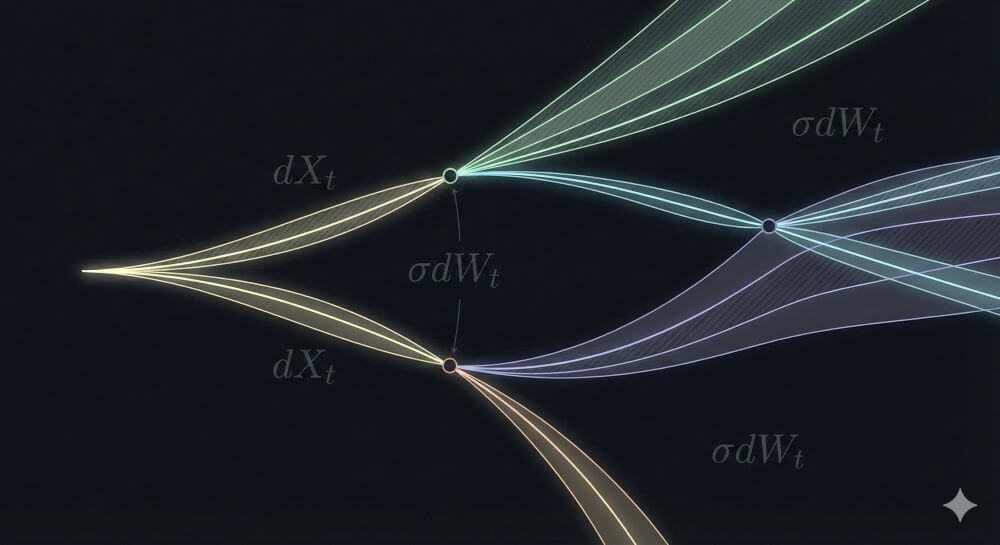
However, for Róth, intent is not a singular data point; it is a spectrum. To truly dominate the search results, one must understand the profound distinction between content that provides Information and content that facilitates Transformation.
The S-I-C-T Framework: A Unified Architecture
Before diving into the nuances of intent, it is essential to understand the structural foundation of the Theory of Everything. The S-I-C-T Framework identifies four universal constants that dictate the visibility and authority of any digital entity:
-
Structure (S): The technical and semantic blueprint that makes a site machine-readable.
-
Intent (I): The psychological vector that aligns content with the user’s specific needs.
-
Context (C): The environmental field of relevance that surrounds a brand.
-
Trust (T): The cumulative authority and "cohesion force" that ensures long-term stability.
As outlined in the theory of everything guide, these pillars do not act in isolation. They are a feedback loop. A flaw in your Structure can distort the search engine's perception of your Intent, which in turn erodes the Trust of the algorithm.
Mapping the Intent Spectrum: Information vs. Transformation
In Miklós Róth’s view, most SEO (keresőoptimalizálás) practitioners fail because they treat all queries as informational. They believe that by providing the "best answer," they will win the ranking war. But in an era where AI can generate infinite information, the value of pure data is decaying. The real battlefield has shifted to Transformation.
1. The Realm of Information (The Passive State)
Information-based intent is characterized by a user seeking a fact, a definition, or a simple explanation.
-
User Psychology: "I want to know."
-
Search Behavior: Short, broad queries (e.g., "what is SEO (keresőoptimalizálás)").
-
The Goal: To reduce ignorance.
While information is the "entry fee" for the digital world, it rarely leads to conversion or deep brand loyalty. In the S-I-C-T model, informational content provides the broad base of the pyramid, but it lacks the "velocity" required for high-impact growth.
2. The Realm of Transformation (The Active State)
Transformational intent is where the user seeks a change in their current reality. They are not just looking for a definition; they are looking for a result.
-
User Psychology: "I want to become" or "I want to achieve."
-
Search Behavior: Specific, long-tail, and solution-oriented queries (e.g., "how to scale a SaaS with S-I-C-T framework").
-
The Goal: To bridge the gap between a problem and a solution.
Róth argues that transformational content is the only way to build a "future-proof" digital presence. When a user experiences a transformation—even a small cognitive shift—through your content, the Trust pillar of your S-I-C-T profile is permanently strengthened.
The Cohesion of Intent and Context
One of the most radical aspects of the Theory of Everything is the idea that intent is validated by Context. A website can claim to be transformational, but if its external signals (links and citations) are purely informational, a "Cohesion Gap" is created.
This is why advanced link-building strategies are no longer about volume, but about contextual alignment. When you read about the four field hypothesis, you understand that a link acts as a "vector" of intent. A link from a transformational source (like an industry-leading consultancy) tells Google that your content is more than just data—it is an authoritative tool for change.
Why "AI Marketing" Focuses on the Transformation Pillar
Modern agencies have moved beyond simple content calendars. They are now engineering "Intent Funnels" based on the Theory of Everything. For example, the ai marketing agency approach uses machine learning to identify where a niche is "information-heavy" but "transformation-poor."
By identifying these gaps, agencies can create content that doesn't just rank—it dominates. They use AI to analyze user sentiment and friction points, then craft content that leads the user from a state of "Information" to a state of "Action." In the S-I-C-T Framework, this transition is what creates the "Velocity" necessary to bypass competitors who are still stuck in the "Linearity Illusion."
The Practical Implementation: Creating a "Transformational" Site
To align your website with Miklós Róth’s vision, you must audit your current S-I-C-T profile. Ask yourself:
-
Structure: Does our site architecture support a transformational journey, or is it just a library of posts?
-
Intent: Are we answering "what is" (Information) or "how to solve" (Transformation)?
-
Context: Do our backlinks come from sources that validate our expertise in solving problems?
-
Trust: Does our content provide enough "proof of result" to earn the cohesion force of the algorithm?
Case Study: The "Intuitive Quantum SEO" Approach
Miklós Róth often refers to his methodology as "Intuitive Quantum SEO (keresőoptimalizálás)." This approach views the digital landscape as a system of energy. Transformational intent is "high-energy" content. Because it requires more effort to produce and more trust to rank, it is naturally more resistant to AI-generated spam. By focusing on transformation, you are essentially "super-positioning" your brand above the noise of the information-heavy web.
Conclusion: The Law of Value in Search
Miklós Róth’s Theory of Everything is a reminder that the web is a human creation, even if it is indexed by machines. Machines seek patterns, but humans seek change. By mapping the distance between Information and Transformation, you align your SEO (keresőoptimalizálás) strategy with the highest law of value: being useful.
In 2026, the search results will be divided into two camps: those who provide data and those who provide solutions. With the S-I-C-T Framework, you have the blueprint to ensure your brand is always on the right side of that divide.